

Appearance
Understand Brand DNA
Your Brand DNA is the single source of truth about who you are, what you stand for, and how you communicate.
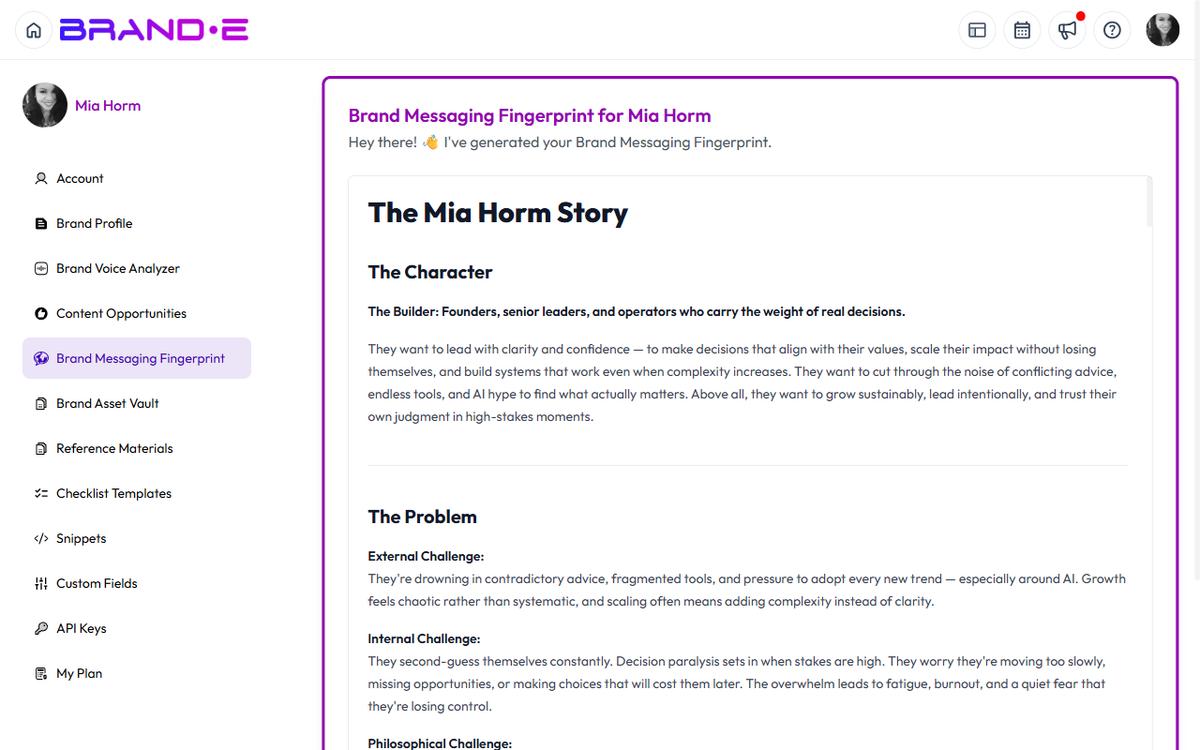
It is not an optional feature.
It is the foundation that powers Content Agent recommendations, content generation, and image creation.
What Brand DNA Is
Brand DNA is a structured profile that captures:
- Business objectives: What this brand is trying to achieve
- Audience triggers: Who buys, why, and when
- Content channels: Where you publish
- Brand voice: Your tone, storytelling patterns, and emotional voice
- Brand assets: Documents, links, videos, and images that define your visual and strategic identity
This information is stored centrally in Brande.ai and referenced in every content decision.
You set it up once during onboarding, then maintain it as your brand evolves.
Why Brand DNA Matters
Without Brand DNA, content generation defaults to generic AI voice.
With Brand DNA, content generation becomes brand-specific.
Content Agent watches your Brand DNA
Content Agent analyzes your Brand DNA to recommend what you should create each day.
If Brand DNA is incomplete, Content Agent can't do its job.
If Brand DNA is outdated, Content Agent recommends the wrong topics.
Content Creation uses your Brand DNA
When you create a new project, Brande.ai injects your Brand DNA as context.
Every piece of content—every sentence, every image, every headline—is filtered through your brand voice and business objectives.
If your Brand DNA says "we speak to founders under 30 who value speed," Brande.ai won't generate long-form technical deep-dives.
If your Brand DNA says "we are thought leaders in fractional finance," Brande.ai won't generate listicles.
Image generation relies on Brand DNA
Brande.ai generates on-brand images automatically.
The images inherit your visual identity, audience, and tone from Brand DNA.
If Brand DNA includes your logo, colors, and visual style, images come out on-brand.
If Brand DNA is weak or missing visual elements, images are generic.
The Two Sides of Brand DNA
Strategic Side
- Business objectives
- Audience and purchase triggers
- Content channels
- Competitive positioning
This drives Content Agent recommendations.
Voice & Expression Side
- Brand voice profile (tone, storytelling, emotional patterns)
- Brand assets (documents, images, videos, links)
- Visual style and colors
- Messaging frameworks
This drives content generation and image creation.
Both sides must be strong for the system to work.
How Brand DNA Feeds Into Everything
Brand DNA
    ↓
Content Agent → Recommendation: "Write about [topic] for [audience] on [channel]"
    ↓
Content Creation → "Generate content matching [brand voice] for [audience trigger]"
    ↓
Images → "Generate images with [visual style] that appeal to [audience]"
Skip any step and the output degrades.
How to Build Strong Brand DNA
During onboarding, you answer five key questions:
- Brand Basics: Name, stage, logo, category
- Business Objectives: 2–3 specific goals for the next 6–12 months
- Audience & Purchase Triggers: Who buys and why
- Content Channels: Where you publish (2–4 channels)
- Brand Voice & Assets: Examples of your actual voice
Each answer becomes part of Brand DNA.
Spend time on each section.
Generic answers create generic output.
Specific answers create specific, effective output.
How to Maintain Brand DNA
Brands evolve.
As you learn, market, and grow:
- Quarterly: Add new voice examples to keep your brand voice current
- Annually: Review and update business objectives when strategy changes
- After customer research: Update audience triggers with real insights
- When distribution strategy changes: Add or remove channels
Update Brand DNA before output degrades.